The Report Your Foundation Is Waiting On
Structural design cannot start until the geotech report lands. Magrym runs geotechnical investigations across Midland and the Permian Basin with the drilling, the AASHTO accredited laboratory, and the licensed engineers under one roof, so the report shows up on schedule and holds up under the building.
Know the Ground Before You Load It
A geotechnical investigation answers the first question every structure asks: what will the ground do under load? A subsurface investigation drills and samples borings across the site, the soils are tested in the laboratory, and a licensed Texas Professional Engineer turns the data into the values design depends on: bearing capacity, settlement estimates, foundation options, and the site preparation the soils demand. The sealed report is what the structural engineer designs from and the building department expects to see.
The report is also a schedule gate. Foundation design waits on it, which means permits wait on it, which means the project waits on it. And a thin report costs more than the fee: vague recommendations push structural engineers toward conservative, expensive foundations, and soils surprises found during excavation become change orders instead of line items.
Magrym runs the whole investigation in-house. Our crews drill and sample, the samples move to our AASHTO-accredited laboratory in Midland, and our engineers and geoscientists write recommendations grounded in West Texas soils: the caliche, silts, and sands this region builds on. No third-party lab handoffs, no waiting on someone else’s queue, and you talk directly to the professional running your investigation.
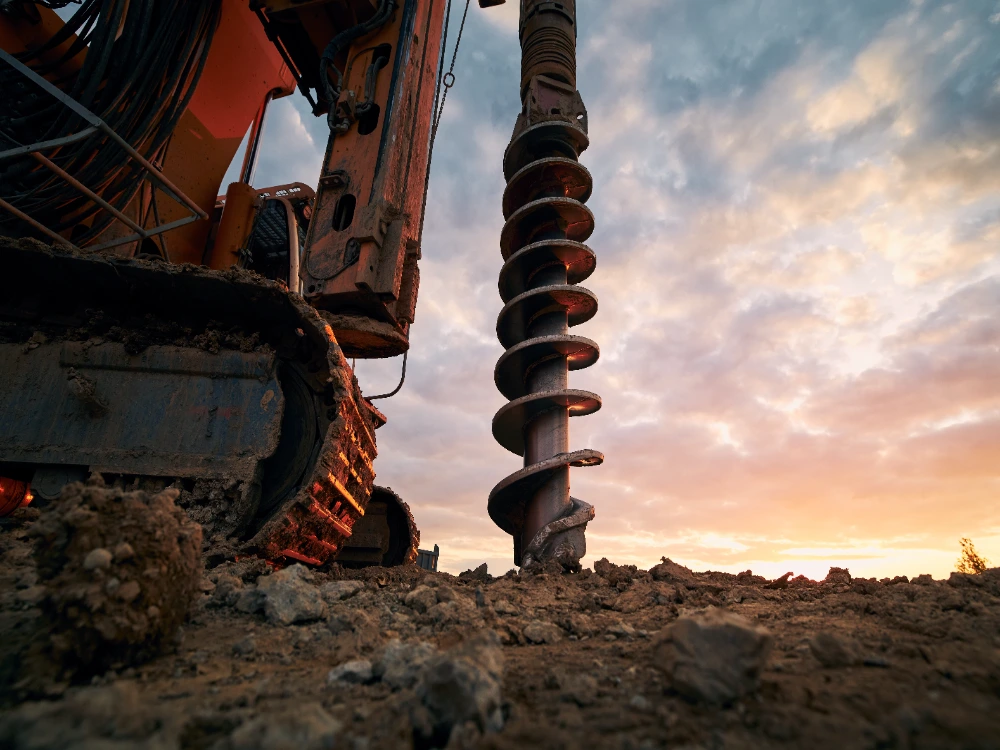
The Full Investigation, In-House
Field, laboratory, and engineering under one roof, with the geotechnical site investigation scoped to the structure you are building.
Soil Borings and Field Exploration
We plan the boring layout around the structure, then drill, sample, and log the soil profile. The subsurface investigation records standard penetration testing resistance, sample recovery, and groundwater observations where they matter to design.
- Boring layout and drilling
- Sampling and field logging
- Groundwater observation
In-House Laboratory Testing
Samples go straight to our AASHTO-accredited laboratory in Midland, where the classification, strength, and consolidation testing happens on our schedule, not a subcontractor’s.
- AASHTO-accredited laboratory
- Classification and index testing
- Strength and consolidation testing
Engineering Analysis and Recommendations
Licensed Texas Professional Engineers turn the data into design values: bearing capacity, settlement, foundation alternatives compared honestly, and the site preparation the soils require. Site characterization is documented so the reasoning behind every number stays visible.
- Soil bearing capacity and settlement
- Foundation alternatives compared
- Site preparation guidance
Expansive and Problem Soils
West Texas builds on soils that move. We test swell potential, flag caliche and collapsible layers, and give the moisture and subgrade guidance that keeps slabs flat.
- Swell potential testing
- Caliche and collapsible soils
- Moisture conditioning guidance
Sealed Geotechnical Reports
The deliverable is a sealed geotechnical report the structural engineer can design from and the building department accepts: clear parameters, clear recommendations, no filler.
- Sealed by licensed engineers
- Design-ready parameters
- Clear, buildable recommendations
Design and Construction Support
We stay available after delivery: questions from the design team, earthwork and compaction testing during construction, and judgment calls when the excavation opens.
- Structural engineer coordination
- Earthwork and compaction testing
- Construction phase answers
Who Relies on Our Investigations
Anyone putting weight on West Texas ground needs to know what it will carry.
Developers and Builders
Commercial buildings, metal buildings, and multifamily projects all wait on the geotech report to design and permit. Magrym provides geotechnical investigation services for construction on a schedule the project can plan around.
Energy, Oil and Gas
Tank batteries, compressor stations, and facility structures load the ground hard across the Permian Basin. We deliver geotechnical investigation for industrial projects and the containments those facilities depend on.
Public and Institutional
Schools, hospitals, and municipal structures carry long design lives and close review. We provide the investigations and sealed reports public projects require.
Architects and Structural Engineers
Design teams need parameters, not prose. We write reports engineers can lift values from directly, and we answer the phone when a question comes up mid-design.
From Boring to Report Under One Roof
Most geotech delays happen between firms: the driller, the outside lab, the reviewing engineer. Magrym owns every step of the geotechnical exploration, and our AASHTO accredited laboratory sits in Midland next to the people writing your report.
- Licensed Professional Engineers and Geoscientists
- AASHTO-accredited soils laboratory in-house
- West Texas soils experience: expansive clay, caliche, collapsible silts
- You talk directly to the professional on your investigation
From Boring Plan to Sealed Report
A clear path, run by the same professional, with the geotechnical exploration scoped to the structure and its loads.
Scope and Boring Plan
We review the structure, the loads, and the site, and plan the borings the design actually needs. Fixed-fee proposal up front.
Drill and Sample
Our crews mobilize, drill, and sample to the plan, logging conditions and groundwater as the borings advance. In-situ testing is performed in the hole where the soils call for it.
Laboratory and Analysis
Samples move to our AASHTO-accredited lab, and our engineers run the analysis while the testing completes.
Sealed Report and Support
You get a sealed, design-ready report on schedule, and the same team stays available through design and construction.
Frequently Asked Questions
It is the study of what the ground beneath a site will do under the loads a structure puts on it. Borings are drilled and sampled, the soils are tested in a laboratory, and a licensed engineer converts the results into design values. The deliverable is a sealed document covering bearing capacity, settlement, site preparation, and the geotechnical investigation and foundation recommendations the structural engineer designs from.
Before foundation design starts, which in practice means early in the project. Structural engineers need the report to size foundations, building departments commonly require it with the permit submittal, and lenders often expect it in the project file. Ordering the investigation while the site plan is still settling keeps the report off the critical path.
It depends on the footprint, the loads, and how much the soils vary across the tract. A small commercial building may need three to five borings, while a large industrial facility needs a grid across the pad areas. Depth is driven by the stress the foundation puts into the ground, extending well below the anticipated bearing level. We set the layout and the depths in the boring plan, and standard penetration testing resistance in the field tells us when to extend a hole.
A typical investigation runs two to four weeks from authorization to sealed report, driven by drilling access, laboratory testing time, and the complexity of the analysis. Because our laboratory is in-house and our crews are based in Midland, we control most of that timeline, and we can compress it when a project is up against a date.
Much of the region is built on expansive clays that swell and shrink with moisture, caliche layers that complicate excavation, and silts that can collapse when wetted. Each behaves differently under a foundation, and generic recommendations miss them. Our engineers and geoscientists work these soils every week, so the report reflects the ground you actually have.
Yes. The same firm that writes the geotechnical report provides the construction materials testing that follows it: compaction testing during earthwork, concrete testing during foundation pours, and the special inspections the code requires. One lab and one team from investigation through construction keeps the data consistent and the accountability in one place.
Building on West Texas Ground?
Get the geotech report your schedule is waiting on. Magrym delivers a geotechnical site investigation
in Midland, TX, drilled, tested, and sealed in-house, with a delivery date committed at proposal.
Call (432) 999-2737 to get a fixed fee proposal this week.