Foundation Design Midland TX: Built From Site Data, Not Assumptions
Limited geotechnical data can lead to overly conservative designs, unnecessary concrete, and higher construction costs. Magrym uses in-house laboratory testing, and engineering analysis to design shallow, deep, and equipment foundations for site-specific conditions across Midland and the Permian Basin.
The Ground Decides. We Translate.
Foundation design turns geotechnical data into a buildable solution: selecting the appropriate foundation type, establishing bearing elevations and design parameters, and defining site-preparation requirements.
The design must account for bearing capacity, settlement, shrink-swell potential, constructability, and cost. Across West Texas, the appropriate solution varies because subsurface conditions vary from site to site.
Limited subsurface data increases design uncertainty. That uncertainty can lead to unnecessarily conservative recommendations, such as deeper piers, thicker slabs, and more reinforcing steel, or to a foundation system that does not adequately address caliche, collapsible silts and sands, or other site-specific conditions. The consequences can include differential movement, cracked slabs, and doors that no longer operate properly.
Magrym develops foundation recommendations from measured data. With an AASHTO-accredited laboratory, and licensed engineers, we maintain continuity from field exploration through final design. We evaluate practical alternatives, account for constructability, and coordinate directly with your structural engineer throughout the project.
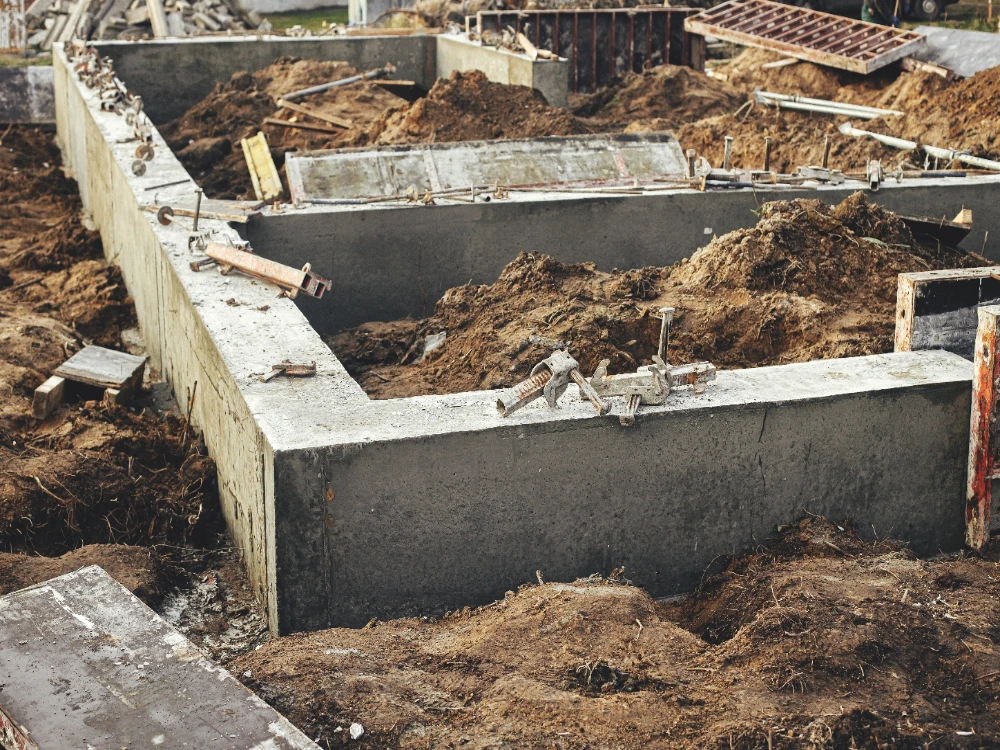
Foundations for Structures and Equipment
From slabs on caliche and collapsible soils to drilled piers under heavy equipment, our structural foundation design work is built to the ground the site actually has.
Shallow Foundation Design
Spread footings, continuous footings, and mat foundations where the soils allow them, designed for bearing, settlement, and the site preparation that makes them perform.
- Spread and continuous footings
- Mat foundation design
- Allowable bearing pressure and settlement
Deep Foundation Design
Where surface soils cannot carry the load, we design the drilled pier foundation that reaches soils that can, sized from measured strength rather than assumption.
- Drilled pier design
- Skin friction and end bearing
- Uplift and lateral capacity
Slabs on Variable Subgrades
West Texas slabs sit on caliche, silts, and sands that can be loose, cemented, or collapsible within the same footprint. We design the slab support, moisture control, and subgrade preparation using the site data and lab results for that ground.
- Slab-on-grade recommendations
- Subgrade improvement and conditioning
- Vapor and moisture guidance
Tank and Equipment Foundations
Tank batteries, compressors, towers, and equipment pads load the ground hard and unevenly. We design the foundations and containment area support the equipment demands.
- Tank battery and vessel foundations
- Compressor and equipment pads
- Tower and pole foundations
Settlement and Bearing Analysis
The numbers behind every recommendation: bearing capacity, settlement, and how the foundation behaves over the life of the structure. Our foundation analysis puts a measured value on each one before the structural team sizes a single element.
- Bearing capacity analysis
- Total and differential settlement
- Load and performance review
Existing Foundation Evaluation
When a slab cracks or a structure moves, we investigate why: the soils, the moisture, the foundation, and the practical repair options. Every foundation analysis is documented and sealed by licensed Texas Professional Engineers.
- Distress investigation
- Cause identification
- Repair recommendations
Who Relies on Our Foundation Design
Every structure meets the ground somewhere. We make sure that meeting goes well.
Developers and Builders
Commercial buildings, metal buildings, and multifamily projects need foundations that pass review and pour without surprises. Magrym provides foundation design services for commercial buildings across the Permian Basin, drawn from real soils data rather than assumed values.
Energy and Oil and Gas
Tank batteries, compressor stations, and processing equipment across the Permian Basin sit on foundations we design for hard, uneven, and vibrating loads. We carry the same approach into foundation design for industrial buildings, shops, and process structures on the same lease.
Architects and Structural Engineers
We deliver the geotechnical side of structural foundation design in the parameters structural teams need, and we stay reachable when the design evolves.
Owners with Foundation Problems
Cracked slabs and moving structures have causes. We investigate existing foundations, name the cause, and lay out the repair path.
Designed From Ground Truth
A foundation recommendation is only as good as the data under it. Magrym keeps the borings, the AASHTO accredited laboratory, and the foundation engineering under one roof in Midland, so nothing gets lost between firms.
- Licensed Texas Professional Engineers
- Sampling, lab, and design in-house
- Caliche, silt, sand, and collapsible soil experience
- You talk directly to the engineer on your design
From Soils Data to Buildable Design
A clear path, run by the same engineer, coordinated with your design team.
Investigate the Site
We direct the boring program, sample the soils ourselves, and test them in our lab, or work from a current investigation if one exists. Fixed-fee proposal up front.
Compare the Options
We evaluate the foundation alternatives the soils support and compare them honestly on performance and cost.
Design and Coordinate
We develop the recommendation with your structural engineer, in the parameters their design needs.
Support Construction
We stay through construction: pier observations, compaction and concrete testing, and answers when the excavation opens.
Frequently Asked Questions
It covers the subsurface data, the analysis, and the buildable recommendation. Magrym directs the exploration, samples the site, tests the soils in our AASHTO accredited laboratory, calculates bearing and settlement, and issues sealed recommendations covering foundation type, depth, bearing stratum, and site preparation. The report is written so your structural engineer can size the elements without a second round of questions.
When the soils near the surface cannot carry the load without excessive settlement, or when collapsible or loosely cemented soils would allow a shallow system to settle unevenly. Borings and laboratory strength testing answer that question directly. If the competent stratum sits well below grade, a drilled pier foundation reaches it. If the near surface soils test strong enough, spread or mat footings are the faster and less expensive answer.
It depends on the soil profile and the structure. Caliche can be a sound bearing layer or a thin crust over loose material, and collapsible silts and sands can lose strength when wetted. Options range from moisture-conditioned or improved subgrades under stiffened slabs to drilled piers that reach a consistent bearing stratum. We measure the soil behavior in our laboratory and design the system the site data supports.
Yes. Tank batteries, vessels, compressors, and tower structures are a large share of our Permian Basin work. Equipment foundations carry concentrated, sometimes vibrating loads and often sit inside containment, which changes the design. We handle the geotechnical design for those installations and coordinate with the equipment and structural requirements.
Yes. We investigate distressed foundations: cracked slabs, differential movement, doors and frames going out of square, by examining the soils, the moisture conditions, and the foundation itself. The result is a sealed evaluation that identifies the likely cause and lays out practical repair options, useful for owners, buyers, and the contractors doing the repair.
No. We work with them. The geotechnical engineer defines what the ground supports and recommends the foundation approach; the structural engineer designs the members and reinforcement. On projects without a structural engineer yet, we can coordinate the full design team. Either way, the two designs stay consistent because the communication is direct.
Designing a Foundation in West Texas?
Get a foundation designed to your soil, not to uncertainty. Midland, TX.